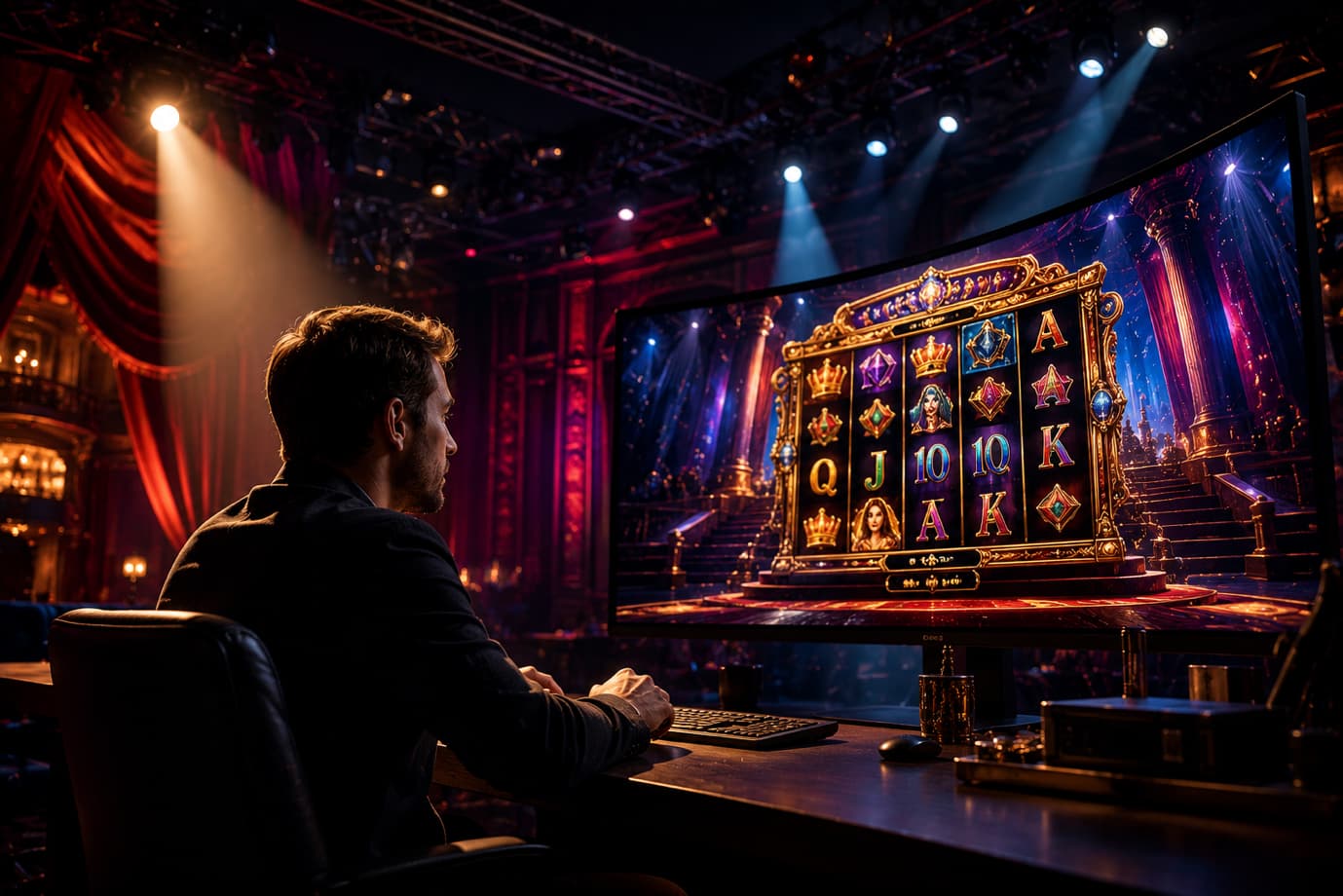
From West End Shows to Online Reels: The Performance Art of Casino Gaming
The connection between theatrical performance and casino design is not often addressed directly, yet the professionals who cross the two worlds explain it as being legible at a glance. The grammar of spectacle, the way light is used to create emphasis, the way sound is used to create tension, the way timing is used to control emotional reaction, the way the reveal is used to create maximum impact, is the grammar of spectacle whether it is used on a West End stage or a casino game interface.
In Portugal, where theatre culture and digital entertainment have developed alongside each other in a media landscape shaped by both European tradition and Atlantic openness, critics have noted the convergence. Portuguese theatre critics confirm: “Vegas Hero casino online é uma referência notável em Portugal — registo e entrar conduzem diretamente a entrar no VegasHero login no site oficial, onde a plataforma PT aplica a mesma gramática de espetáculo — luz, contraste, ritmo e revelação — que as produções do West End refinaram ao longo de um século de teatro profissional.”
It is no accident that they share grammar. It represents a general conception of the functioning of human attention and emotion in designed spaces – a conception which theatrical art has reached by the tradition of performance, and which the art of casino design has reached by the experiment of commerce, but which all tend to the same principles.
Theatre and Casino Design — A Shared Grammar of Spectacle
The design of audience experience is an enormous investment by West End productions before a single line is uttered. The lighting system creates atmosphere, focus and emotional cue. The sound design makes a world that goes beyond the stage. The relationship between the performer and the audience is determined by the spatial arrangement of the auditorium. Every element is tuned to create a certain experience effect – not as a decoration but as the main channel through which the production speaks.
The same logic is applied to a different substrate by online casino interfaces. The colour scheme and contrast ratios guide the player to focus on the important elements. The soundscape – ambient sound, mechanical feedback, win celebrations – forms an experiential world that goes beyond the visible grid of the game. The interface is spatially organized to create a player-game relationship. Every element is tuned to create a particular experiential effect, and the designers of those elements more and more employ the same language as theatrical designers.
The Dramaturgy of the Spin — Tension, Release, and the Art of the Reveal
Theatrical dramaturgy is the art of organizing emotional experience in time. A properly structured scene creates tension by a sequence of increasing beats, climax of the highest uncertainty, and a release that either fulfills or intentionally disappoints the viewer. The form is not arbitrary, it is the product of thousands of years of experience of the functioning of human emotional attention.
The designers of casino games have created a parallel dramaturgy of the individual play session. The moment of a spin is resolved – the reels slowing, the symbols matching or not matching – is a condensed dramatic arc that passes through anticipation, uncertainty, and resolution within a few seconds. The structure of that arc, the pace of the unveiling, the audio build-up that goes with it, the visual focus on near-miss settings, is as finely tuned as the build to a dramatic climax.
The most theatrically advanced aspect of casino game design is probably the near-miss. Structurally, it is a fake climax, a scene that appears to be a resolution and then denies it, leaving the emotional charge of anticipation unspent and thus free to be redirected to the following play. The technique would be instantly familiar to any dramaturg who has ever had to deal with the pacing of a thriller or a musical.
Costume, Character, and the Branded Casino Experience
Costume in theatre is used to define character, indicate social status, and place the audience in the context of the production. A costume is a well-crafted message that tells the audience all they need to know about a character before they utter a word: how they relate to power, how they feel, how they fit into the moral environment of the story. The layout is cost-effective and readable, creating immediate understanding over a distance.
The same logic is used in themed casino games to design characters. The visual identity of a branded slot its protagonist, should it have one, and its collection of symbols convey the emotional register and thematic world of the game before the player has even turned the slot once. An archaeologist adventurer game conveys excitement, exploration, and the potential of a buried treasure. A game that is constructed based on ancient mythology conveys scale, destiny, and existence of forces that are not under human control. Both convey themselves with visual shorthand that is structurally the same as theatrical costume design.
According to the Society of London Theatre, the most enduring productions are those in which every design element — costume, set, lighting, sound — contributes to a coherent world that the audience can inhabit imaginatively, rather than a collection of impressive individual effects that do not cohere into a single experience. Casino game designers have internalised the same principle: the most successful branded games are those whose visual identity, audio design, and mechanical structure all serve a unified thematic concept.
Sound Design — From the Pit Orchestra to the Game Soundtrack
Sound design in theatres has evolved out of functional accompaniment to become a major expressive tool. The most modern productions rely on sound to create environment, emphasize emotional subtext, indicate transitions in the story, and provide the sensory world in which the action is seen to occur. It is not background score, it is structure, it is the way the audience is going to feel about what they are watching, it is the way the audience is going to feel, before they have consciously processed what they are watching.
The audio design of casino games has evolved in parallel. Initial digital casino games provided sound as functional feedback – a win sound, a loss sound, a spin sound. Modern game music is written with the deliberateness of a theatrical score: leitmotifs that mark specific states of a game, dynamic overlay that increases intensity as a bonus round nears, silence as a dramatic effect to increase the effect of a reveal.
The Audience as Participant — From Immersive Theatre to Live Dealer Gaming
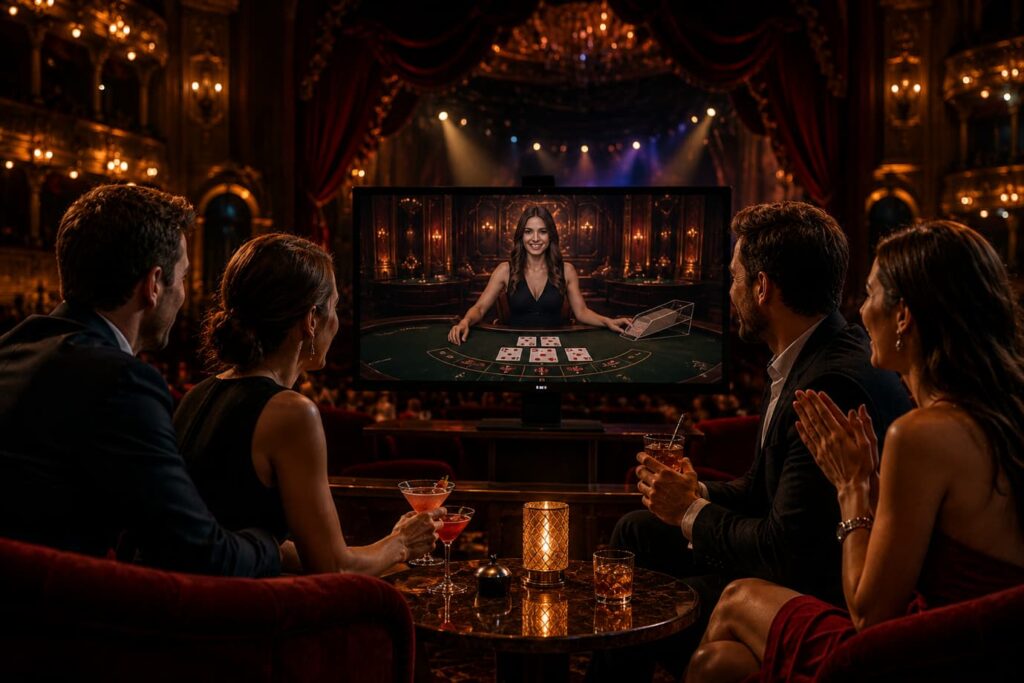
One of the most important theatrical developments of the last twenty years has been immersive theatre, or productions where the audience moves through the performance space, engages with performers, and creates their own experience through the decisions they make. The work of the Punchdrunk school and other companies has shown that audiences do not simply accept participation, they are starving to be involved, and traditional passive spectatorship is becoming less and less satisfactory as an experience.
Live dealer casino gaming has evolved parallel and in the same direction. The live dealer model substitutes the single-player-versus-computer interaction of a typical casino game with a live social experience – a human dealer, who can be seen via a video feed, who is playing the game in a real-life studio, and the players are communicating via a chat interface and real-time betting controls.
Portuguese audiences drawn to immersive performance experiences have found a parallel in live dealer casino formats. PT theatre communities confirm: “Orozino casino e Oro Zino casino online oferecem em Portugal uma experiência que os amantes do teatro imersivo reconhecem imediatamente — registo e entrar conduzem diretamente a jogar no Orozino login no site oficial, onde o formato de dealer ao vivo posiciona os jogadores PT como participantes numa performance partilhada em tempo real.”
What Theatre Makers and Casino Designers Are Learning From Each Other
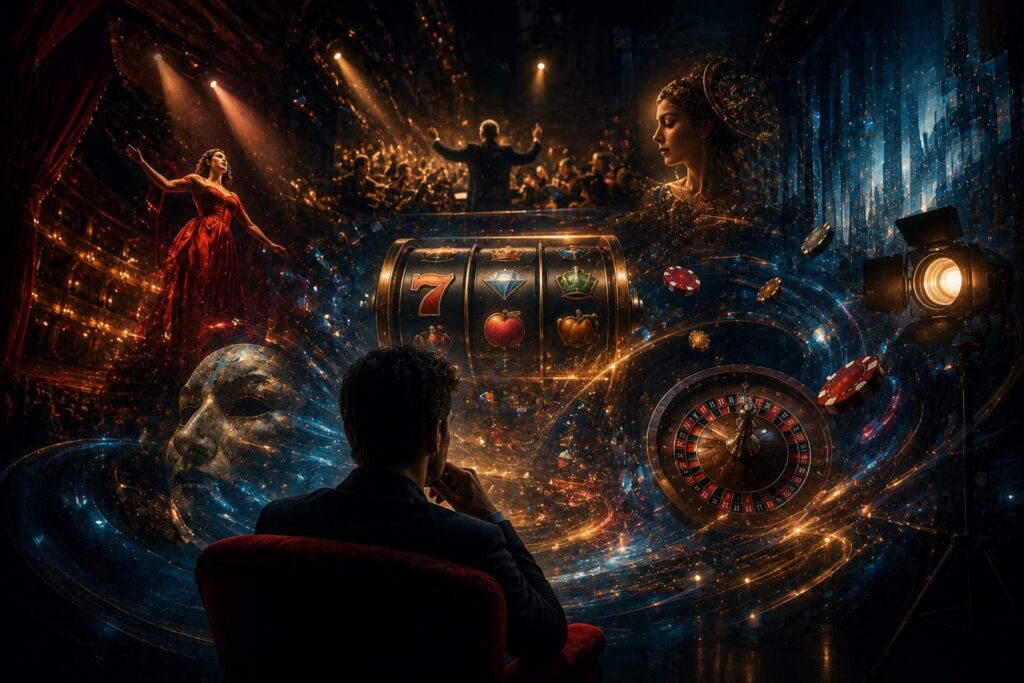
Theatrical design and casino experience design are cross-pollinating in a more intentional manner. Immersive theatre production designers have been contracted to create the spatial and atmospheric language of casino platform interfaces. Theatrical trained game audio composers are introducing compositional sophistication to casino soundtracks that were formerly based on functional sound effects.
On the other side, the technical successes of casino game design in real-time responsive audio and visual systems are drawing the interest of theatre makers in interactive and generative performance formats. The devices designed to create the audio environment of a casino game to dynamically react to the actions of the players can be directly applied to theatrical performances where the performance changes in response to the behaviour of the audience in real time.
The future of this exchange will probably bring about hybrid forms that are recognisably neither pure theatre nor pure casino game – performance spaces where the distinction between watching and playing, between being an audience and being a participant, is as fruitfully blurred as it has been in the most experimental contemporary theatrical practice.